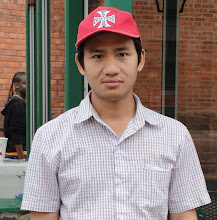
Picnic gathering in Albany attracts 250 refugees who seek a new, safer future
By TOM KEYSER, Staff writer
First published in print: Sunday, June 20, 2010


ALBANY -- Mu Mu was born and lived the first 21 years of her life in refugee camps in Thailand. She is 24 now, and Saturday at Washington Park she wore a smile as bright as her traditional clothes from her family's native Myanmar, formerly Burma.
She was one of more than 250 refugees attending a picnic to mark World Refugee Day, which is today. From Myanmar, Iraq, Bhutan and countries in Africa, the refugees living in the Capital Region sang and danced, ate, lounged in the shade and met other refugees. Their children played on slides and swings, kicked a soccer ball, took mighty swings at a Whiffle ball and flailed away at a pinata.
"These are the survivors," said Jill Peckenpaugh, director of the Albany office of the U.S. Committee for Refugees and Immigrants.
The refugees at the picnic, and the estimated 500 additional refugees who will be resettled in the Capital Region this year, all fled their country because of fear of persecution. They've lost relatives and friends to disease, murder and war.
With initial help from the United Nations and then the USCRI or Catholic Charities of the Roman Catholic diocese of Albany, they are learning English, maintaining apartments, working or trying to find work, and navigating this new universe in the United States.
Mu Mu's family built their own house in the camps -- out of bamboo and leaves. She had never seen a real building until she came to Albany. She had gotten married in the camps and had a child. She had a second one in Albany.
She got a job at first cleaning toilets at Albany Medical Center. She worked hard, worked her way up and three weeks ago started training for a new job, drawing blood from patients.
"We don't have our own house yet or our own car yet," Mu Mu said. "But we are enjoying our life."
There are an estimated 15 million refugees in the world, and fewer than 1 percent get resettled, according to agencies that assist refugees.
"We are lucky to have these gracious, driven people living in our country. And we're especially lucky to have them in Albany," said Jolene Roosenberg, a volunteer who works with refugees "They get into your heart. They become your family."
Ali Kurady sat quietly under a tree with his family. He was a doctor in Iraq who escaped to Dubai, worked as a pediatric doctor for two years, and then was resettled in Albany. He arrived with his wife and three children three months ago.
His older brother, also a doctor, was murdered in Iraq, he said. Sometimes, he said, people were killed, especially professional people, for no apparent reason.
Kurady, who speaks passable English, is taking English classes, as are his wife and children. He plans to take the exams as soon as possible so he can work as a doctor here.
At the picnic, he said, he met refugees from other countries as well as one from Iraq. Although he was scared when he first arrived, he said, he is becoming more comfortable.
"This is more than a new home," he said. "This is the future for my children."
She was one of more than 250 refugees attending a picnic to mark World Refugee Day, which is today. From Myanmar, Iraq, Bhutan and countries in Africa, the refugees living in the Capital Region sang and danced, ate, lounged in the shade and met other refugees. Their children played on slides and swings, kicked a soccer ball, took mighty swings at a Whiffle ball and flailed away at a pinata.
"These are the survivors," said Jill Peckenpaugh, director of the Albany office of the U.S. Committee for Refugees and Immigrants.
The refugees at the picnic, and the estimated 500 additional refugees who will be resettled in the Capital Region this year, all fled their country because of fear of persecution. They've lost relatives and friends to disease, murder and war.
With initial help from the United Nations and then the USCRI or Catholic Charities of the Roman Catholic diocese of Albany, they are learning English, maintaining apartments, working or trying to find work, and navigating this new universe in the United States.
Mu Mu's family built their own house in the camps -- out of bamboo and leaves. She had never seen a real building until she came to Albany. She had gotten married in the camps and had a child. She had a second one in Albany.
She got a job at first cleaning toilets at Albany Medical Center. She worked hard, worked her way up and three weeks ago started training for a new job, drawing blood from patients.
"We don't have our own house yet or our own car yet," Mu Mu said. "But we are enjoying our life."
There are an estimated 15 million refugees in the world, and fewer than 1 percent get resettled, according to agencies that assist refugees.
"We are lucky to have these gracious, driven people living in our country. And we're especially lucky to have them in Albany," said Jolene Roosenberg, a volunteer who works with refugees "They get into your heart. They become your family."
Ali Kurady sat quietly under a tree with his family. He was a doctor in Iraq who escaped to Dubai, worked as a pediatric doctor for two years, and then was resettled in Albany. He arrived with his wife and three children three months ago.
His older brother, also a doctor, was murdered in Iraq, he said. Sometimes, he said, people were killed, especially professional people, for no apparent reason.
Kurady, who speaks passable English, is taking English classes, as are his wife and children. He plans to take the exams as soon as possible so he can work as a doctor here.
At the picnic, he said, he met refugees from other countries as well as one from Iraq. Although he was scared when he first arrived, he said, he is becoming more comfortable.
"This is more than a new home," he said. "This is the future for my children."